History
Tea is not only a national treasure of China, but also a global treasure. The 5,000-year history of tea reflects the Chinese people’s respect for nature and its gifts. Chinese tea culture is a millennia-old legacy accumulated by hundreds of generations. This ancient and traditional beverage embodies the profound essence of Chinese culture. It comes from nature and is imbued with its natural spirit. In the midst of a hectic life, you can often pick up a teapot and brew some tea to soothe your soul. In the taste of tea, you can find inner peace and, with wisdom and ease, weather the ups and downs of life.
The Geography of China's Tea Tradition
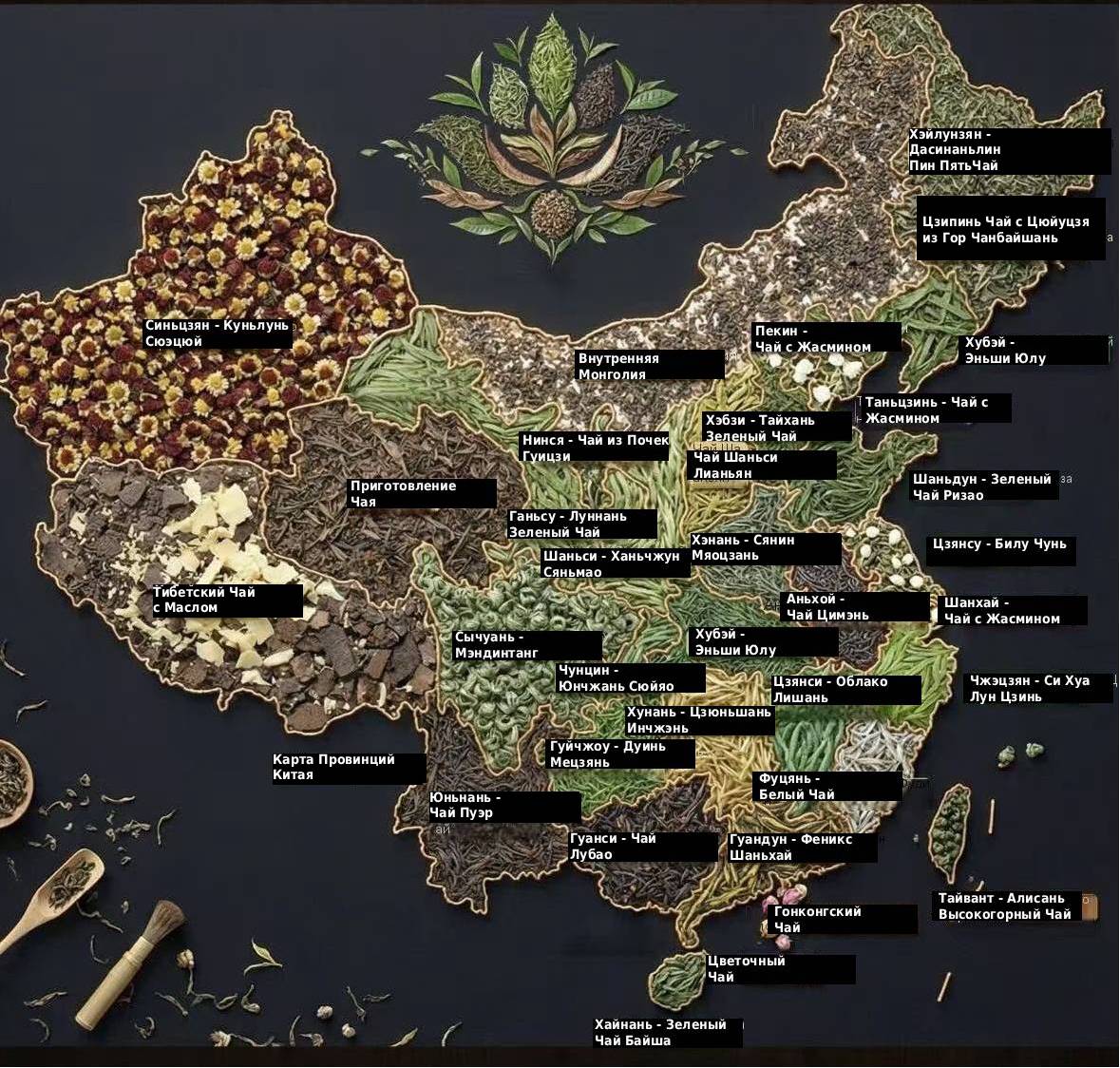
Chinese tea has become widely popular around the world, and there are thousands of varieties in China itself. Each type of tea is closely linked to geographical and climatic conditions, soil composition, and traditional production methods.
All tea varieties are unique and differ from one another. Tea plantations stretch from the gentle hills in the south of the country to the misty mountains in the southwest, from the southern regions where Oolong tea is produced to the northern territories along the Yangtze River, renowned for their green tea.
Various parts of China have gifted the world with distinctive tea varieties, each possessing its own unique properties and character:
Southern China (green tea): Thanks to its humid climate and distinct four seasons, this region has become a true paradise for green tea production.
Oolong Tea Region: Abundant sunshine and rainfall have created ideal conditions for the cultivation of oolong teas, which are distinguished by a rich fruity and floral aroma (with notes of orchid), a golden, transparent infusion, and a smooth, fresh, and long-lasting aftertaste.
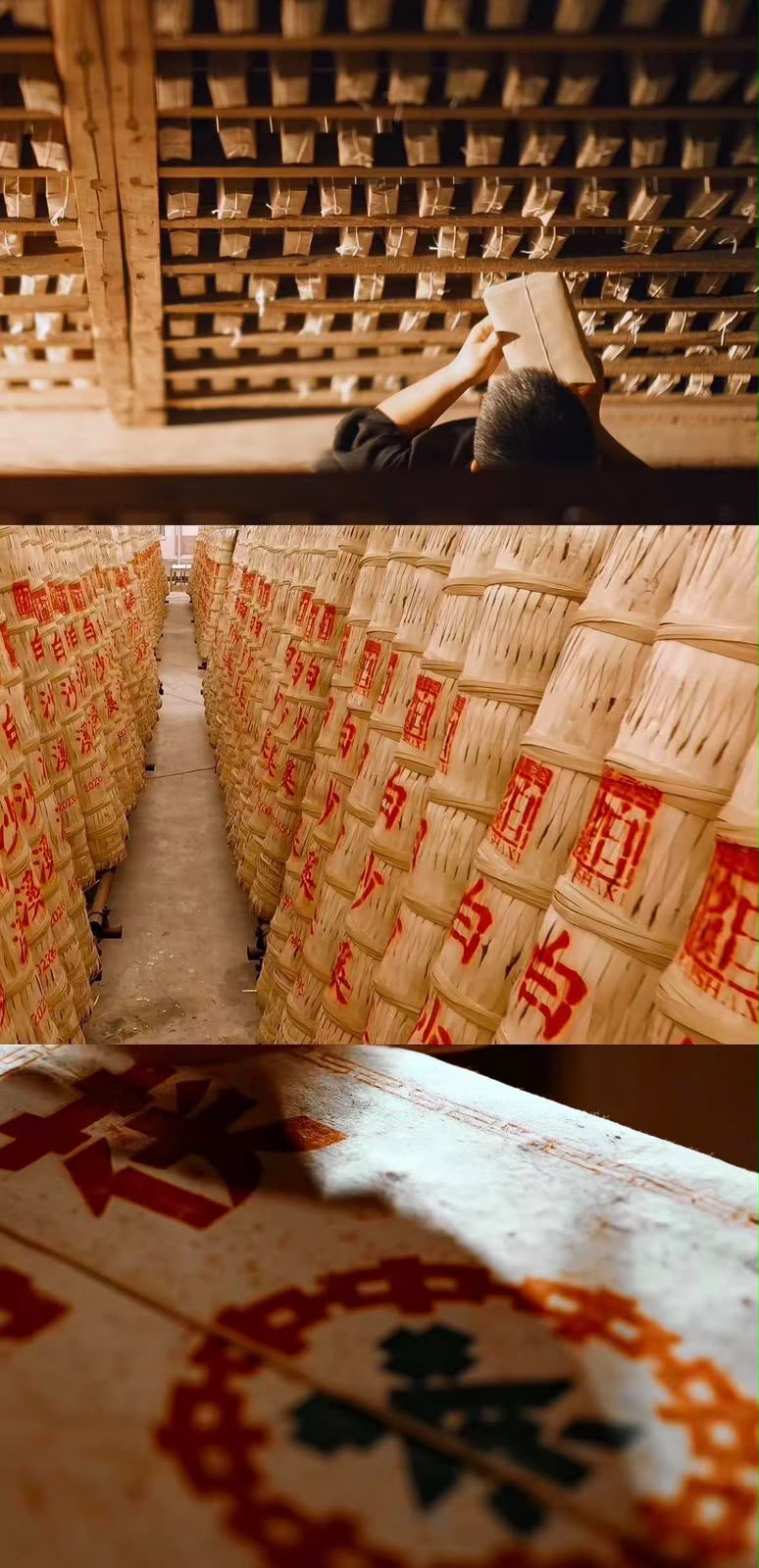
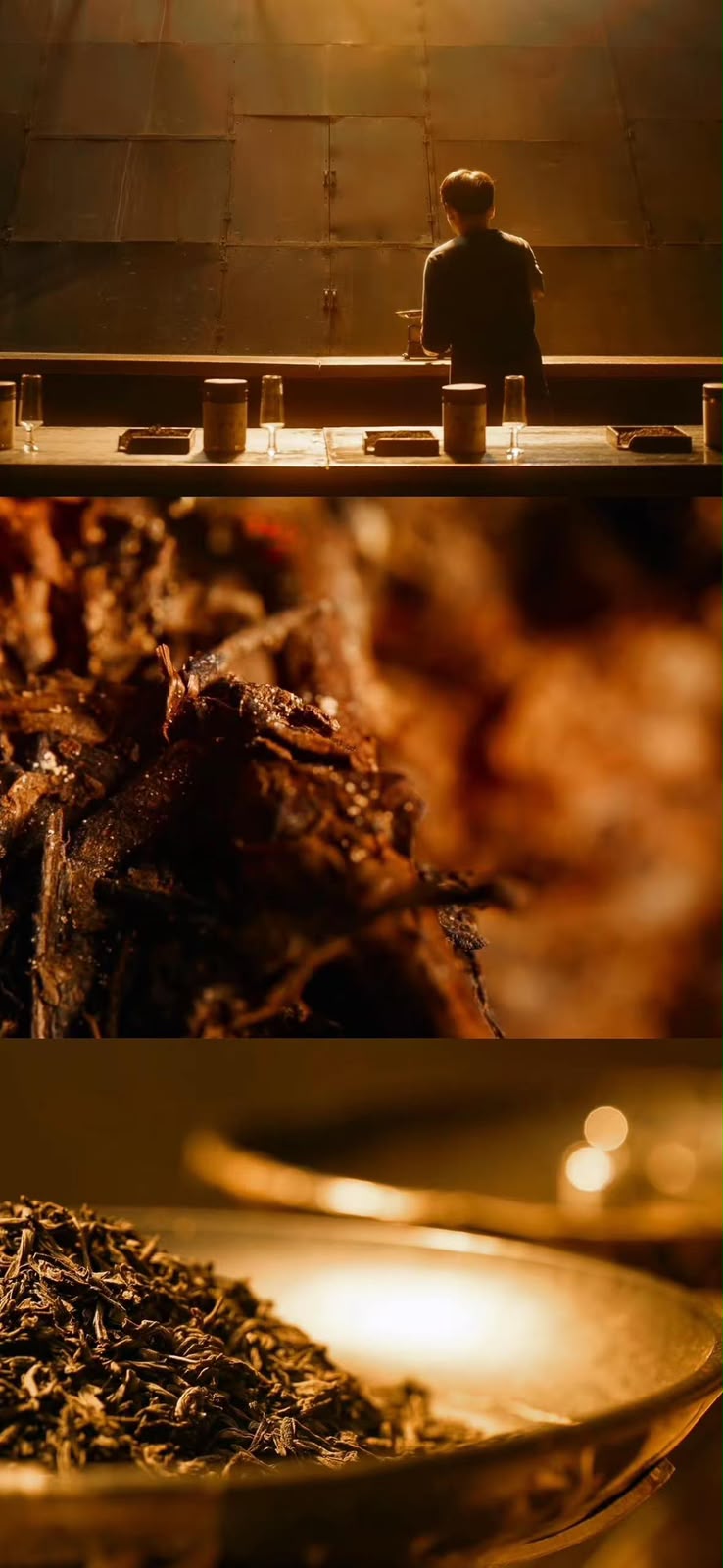
Southwestern Region (Pu-erh Tea): Picturesque mountains and pure springs, shrouded in clouds and mist, are the birthplace of the famous Pu-erh tea. The main characteristic of Pu-erh is that, over the years, its flavor only becomes richer and its aroma more intense. The tea infusion has a bright golden or deep reddish hue, conveying all the depth and flavor of time.
Jiangbei Northern Region (black tea): In a temperate climate with ample sunlight, this region produces excellent black tea. It is distinguished by a pleasant honey aroma, a beautiful reddish-amber infusion, a mellow flavor, and a long-lasting aftertaste.
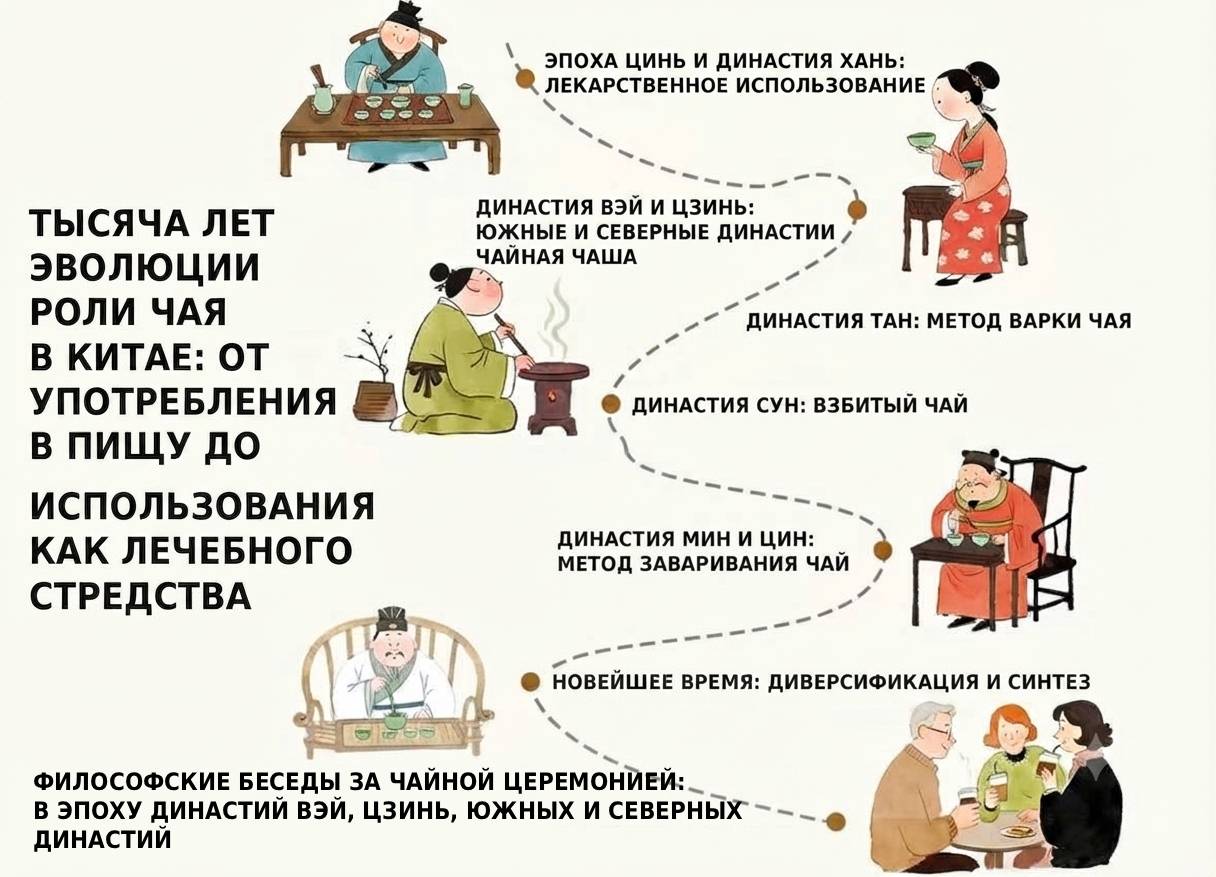
The Evolution of Tea Culture
5,000 years ago: Shennong tasted various herbs and discovered that tea has detoxifying properties.
3,000 years ago: The cultivation of the tea plant began, and tea gradually came to be consumed as food.
2,300 years ago: Tea evolved from a food item into a medicinal remedy.
2,000 years ago: The commercialization of tea began.
1,500 years ago: To facilitate transportation, tea began to be pressed into cakes (bricks).
1,200 years ago: During the Tang Dynasty, tea culture flourished against the backdrop of an economic boom.
1,000 years ago: Tea preparation techniques were refined, and greater attention was paid to the quality of the water and the raw materials themselves.
700 years ago: Emperor Zhu Yuanzhang promoted the popularity of loose-leaf tea, which accelerated the development of the tea industry.
600 years ago: A technological breakthrough in production led to the emergence of new types of tea.
300 years ago: Chinese tea conquered the global market and took a leading position in it.
History
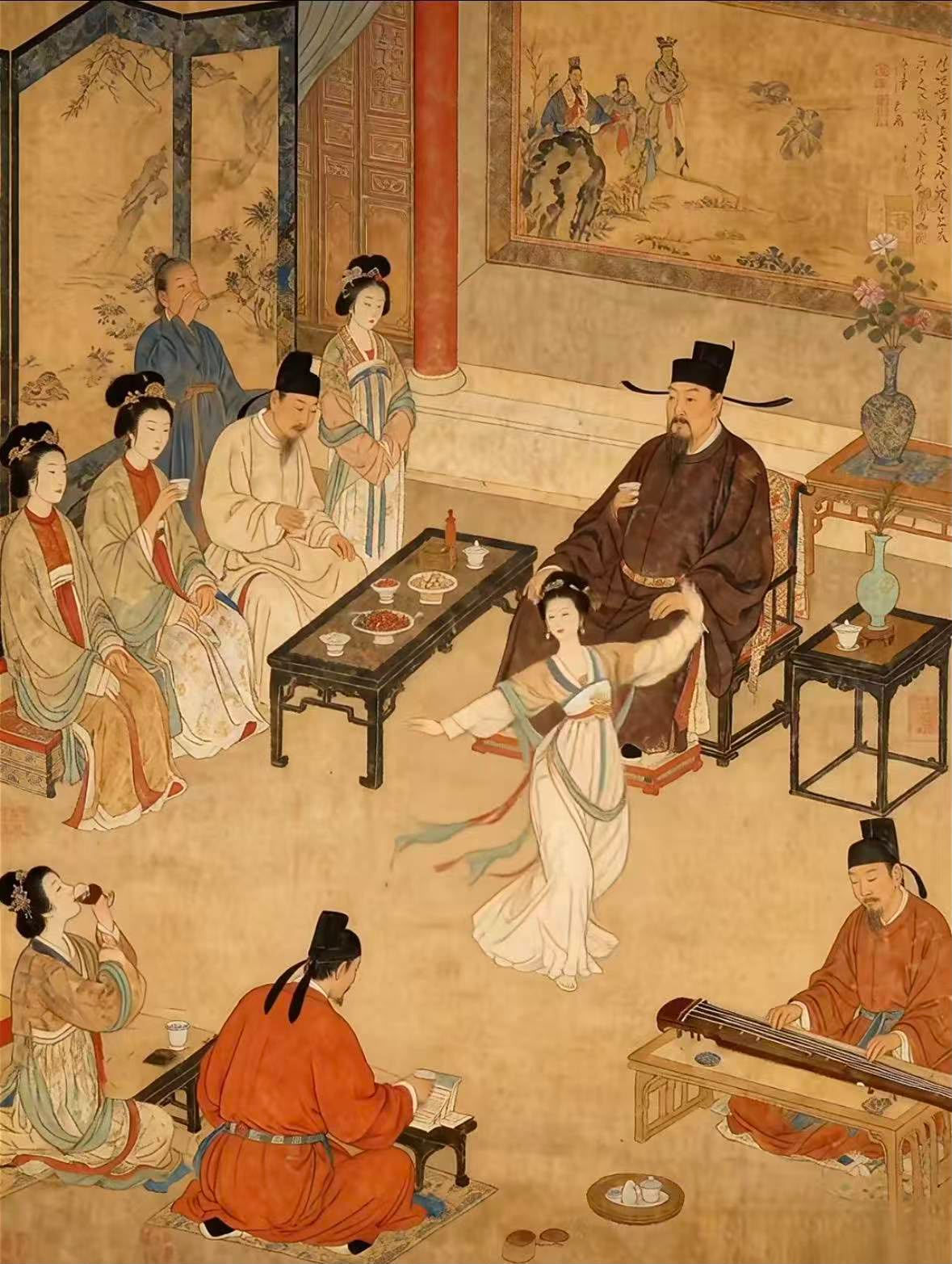
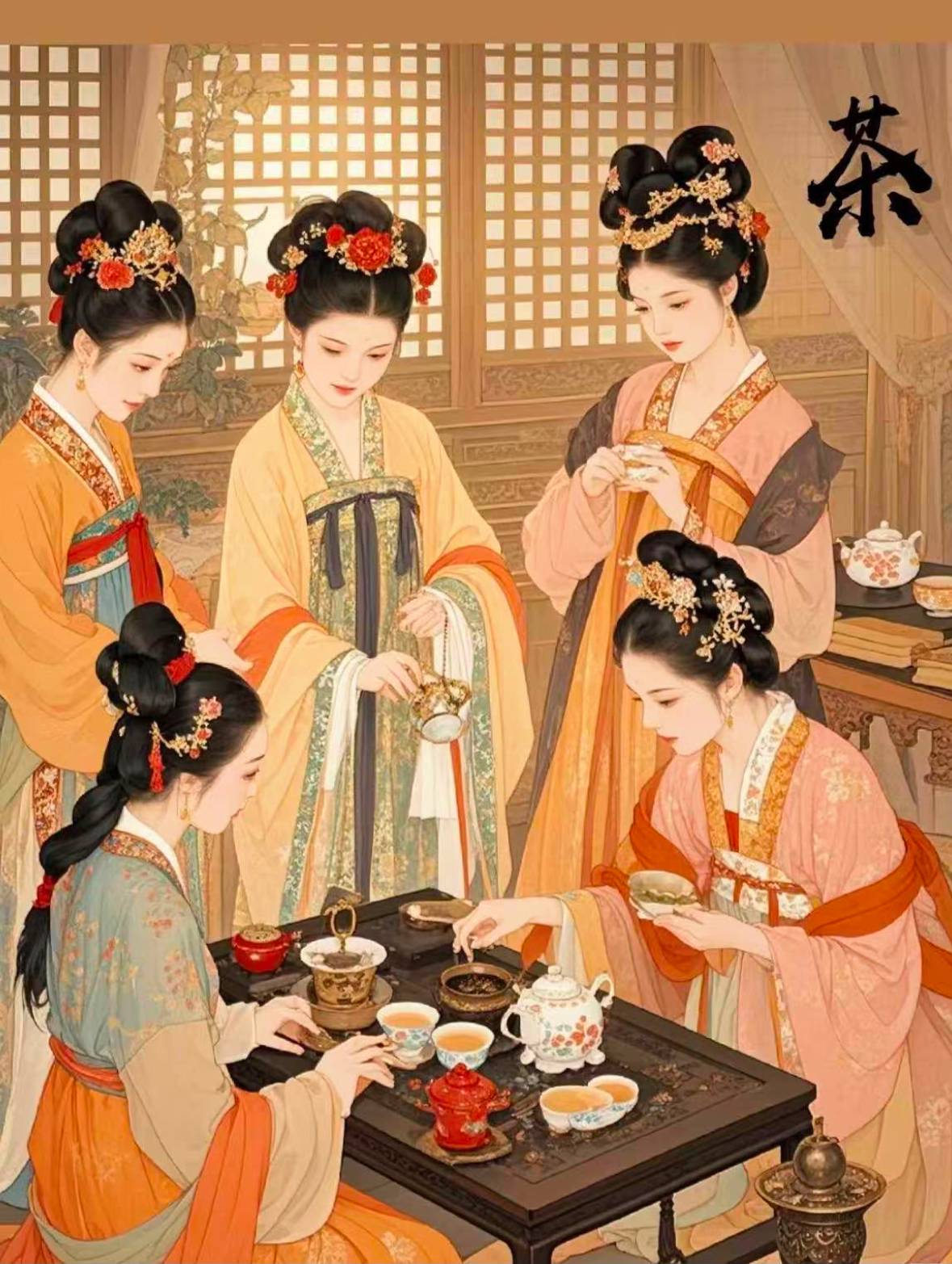
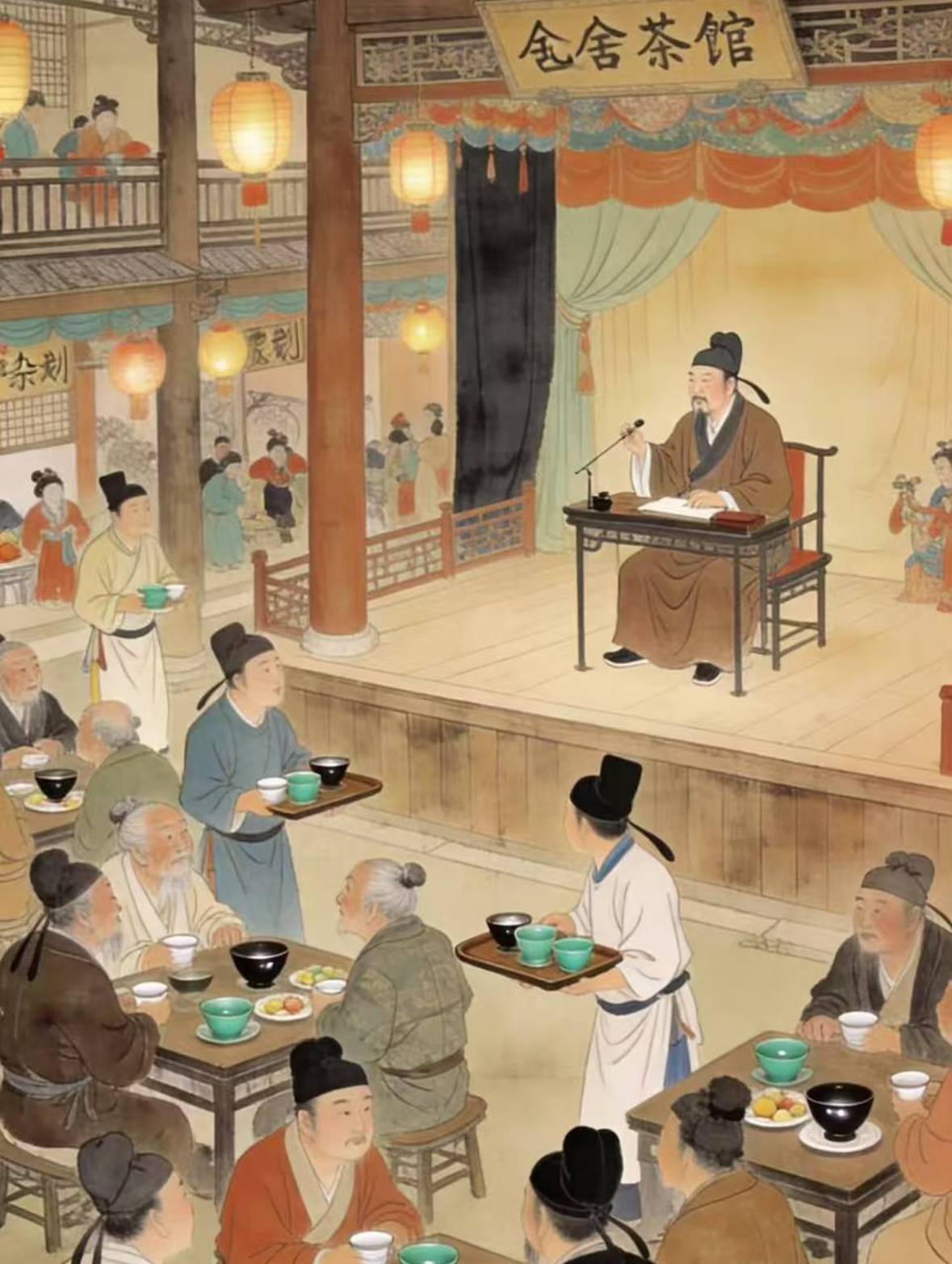
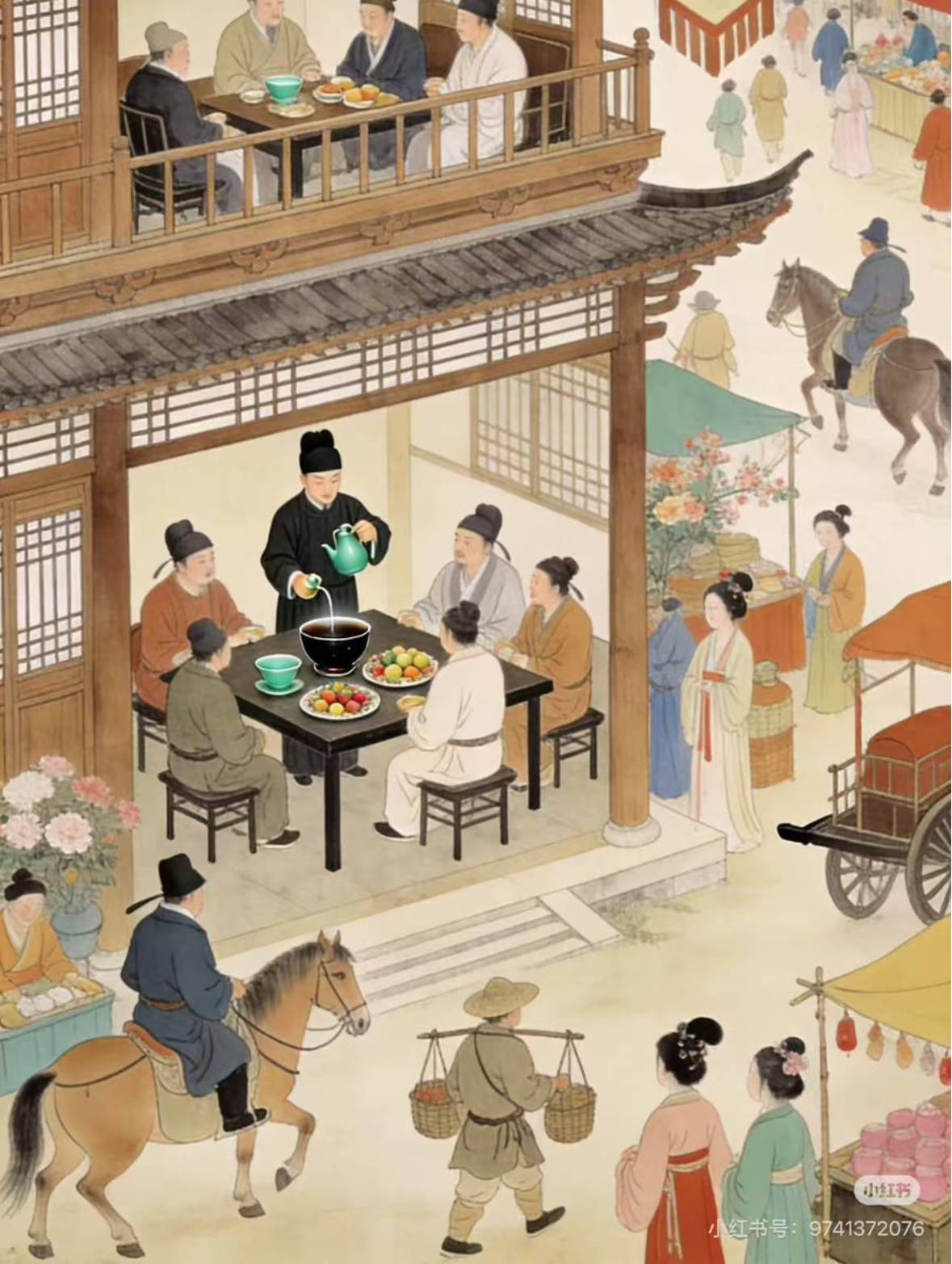
Tea, known since ancient times as the “great drink of the world,” is inextricably linked to the centuries-old history of Chinese civilization. Experience tea culture and feel the unique charm of ancient traditions. Land and coastal trade routes allowed tea to spread throughout the world and find its place on people’s tables in the farthest corners of the globe. The wisdom associated with tea is carefully preserved in tea-drinking traditions and teahouses. Tea parties—refined social gatherings once hosted by ancient masters and thinkers—were typically held in picturesque gardens or elegant tea rooms.
History
Tea has also left a profound mark on literature: poems and songs celebrating its beauty and the depth of tea culture have spread far and wide and have become an important part of our cultural heritage.
Tea is not just a beverage, but a jewel of China’s millennia-old civilization, the embodiment of Eastern wisdom, a way of life, and an entire spiritual world that reflects the aesthetic tastes and cultural code of the Chinese nation. The health benefits of tea largely align with the principles of traditional Chinese medicine, making it an ideal means of maintaining well-being and further reinforcing its high cultural status.